How to Prevent Hair Breakage from Hard Water in Pakistani Cities
Quick Answer: Hard water contains high concentrations of calcium and magnesium ions that deposit on the hair shaft with every wash, roughen the cuticle surface, strip moisture from the cortex, and progressively weaken the hair until it snaps. Preventing hard water hair breakage in Pakistan requires a combination of regular chelating or clarifying rinses to remove mineral buildup, a protective hair serum to seal the cuticle, and a washing routine adjusted specifically for high-mineral water conditions.
Why Hard Water Is One of the Biggest Hidden Causes of Hair Breakage in Pakistan
Most people experiencing hair breakage in Pakistan blame heat styling, chemical treatments, or poor nutrition before they consider their water supply. Hard water is rarely the first suspect, yet it is one of the most consistent and damaging contributors to hair breakage across the country, particularly in cities where groundwater is the primary supply source.
Hard water is defined by its high mineral content, specifically elevated concentrations of calcium carbonate, magnesium sulfate, and in some Pakistani regions, iron and silica deposits. When hard water contacts the hair shaft during washing, these minerals do not rinse away cleanly. They bind to the negatively charged protein structure of the hair cuticle and accumulate with every wash. Over weeks and months, this mineral layer builds up on the hair surface, prevents moisture from entering the cortex, creates friction between hair strands, and roughens the cuticle to the point where the hair shaft becomes brittle and snaps under minimal mechanical stress.
In cities like Daska in Sialkot district, groundwater hardness levels are consistently high due to the mineral composition of the underlying aquifer systems. Residents washing their hair daily or every other day are exposing their hair to mineral accumulation at a rate that compounds faster than the hair's natural resilience can manage without intervention.

How Mineral Buildup Damages the Hair Shaft at a Structural Level
Understanding exactly what hard water does to the hair shaft explains why standard conditioners and masks provide limited relief when mineral buildup is the underlying problem. The damage mechanism operates at the cuticle level first and then progresses into the cortex.
The hair cuticle is composed of overlapping protective scales that lie flat on a healthy hair strand, creating a smooth surface that reflects light, reduces friction between strands, and seals moisture inside the cortex. When calcium and magnesium ions from hard water bind to the cuticle surface, they physically lift these scales away from the shaft, creating a roughened, open cuticle that allows moisture to escape freely. The cortex beneath an open cuticle loses hydration rapidly, and a dehydrated cortex loses its elasticity, becoming rigid and prone to snapping rather than flexing under mechanical stress.
The secondary damage occurs when these lifted, mineral-coated cuticle scales create friction between neighboring hair strands during brushing, styling, and even movement. This friction causes mechanical abrasion that progressively wears down the cuticle layer until the cortex is exposed. Fine hair ends, which have thinner cortex walls to begin with, are the first to snap under this combination of dehydration and mechanical abrasion.
What Chelating and Clarifying Rinses Are and Why They Work
A chelating agent is a compound that binds to metal ions and removes them from a surface by forming a stable, water-soluble complex that rinses away cleanly. In hair care, chelating ingredients specifically target the calcium, magnesium, and iron ions deposited by hard water and remove them from the hair shaft in a way that regular shampoos, conditioners, and even clarifying shampoos cannot achieve.
The most effective chelating agent used in professional hair care is EDTA (ethylenediaminetetraacetic acid) or its derivative disodium EDTA. Citric acid is a gentler naturally derived chelating agent that is widely available and effective for moderate mineral buildup. Phytic acid, derived from rice bran, functions similarly and is increasingly used in clean formulation hair care products.
Clarifying rinses work by using mild acidic compounds to lower the pH at the hair surface, which causes the lifted cuticle scales to close back down and helps disrupt the ionic bond between mineral deposits and the cuticle protein. Apple cider vinegar diluted in water is the most commonly used DIY clarifying rinse in Pakistan and provides genuine cuticle-smoothing and mild mineral-loosening benefits when used correctly. A dilution of one part apple cider vinegar to three parts water applied after shampooing, left for two minutes, and rinsed thoroughly is the appropriate concentration for weekly use.
Step-by-Step Hard Water Hair Care Routine for Pakistani Cities
This routine is structured to remove existing mineral buildup, prevent new accumulation from compounding, and protect the hair shaft between washes in a high-mineral water environment.
Step One: Weekly Pre-Shampoo Chelating Treatment. Once a week, before shampooing, apply a chelating treatment or a citric acid rinse to dry or damp hair. Work it through from roots to ends, focusing on the lengths where mineral accumulation is heaviest. Leave it on for five minutes before rinsing. This breaks down and removes the mineral layer before the shampoo is applied, allowing the shampoo to cleanse the actual hair surface rather than sitting on top of a mineral barrier.
Step Two: Shampoo with Lukewarm Water. Wash hair with lukewarm water rather than hot. Hot water opens the cuticle wider, which allows more mineral ions to bind to the hair shaft during the wash. Lukewarm water cleanses effectively while keeping the cuticle in a more closed position that resists new mineral adhesion.
Step Three: Apply an Acidic Clarifying Rinse After Conditioning. After rinsing out the conditioner, apply a diluted apple cider vinegar rinse. This lowers the pH at the hair surface, helps close the cuticle, and removes residual mineral deposits that the shampoo loosened but did not fully rinse away. Follow with a cool water final rinse to close the cuticle completely.
Step Four: Apply a Hair Serum to Seal and Protect the Cuticle. After gently towel-drying the hair, apply a hair serum to damp lengths and ends before any heat styling or air drying. A serum creates a protective film over the cuticle surface that reduces friction between strands, locks remaining moisture into the cortex, and provides a physical barrier that slows new mineral adhesion from the environment and subsequent water exposure.
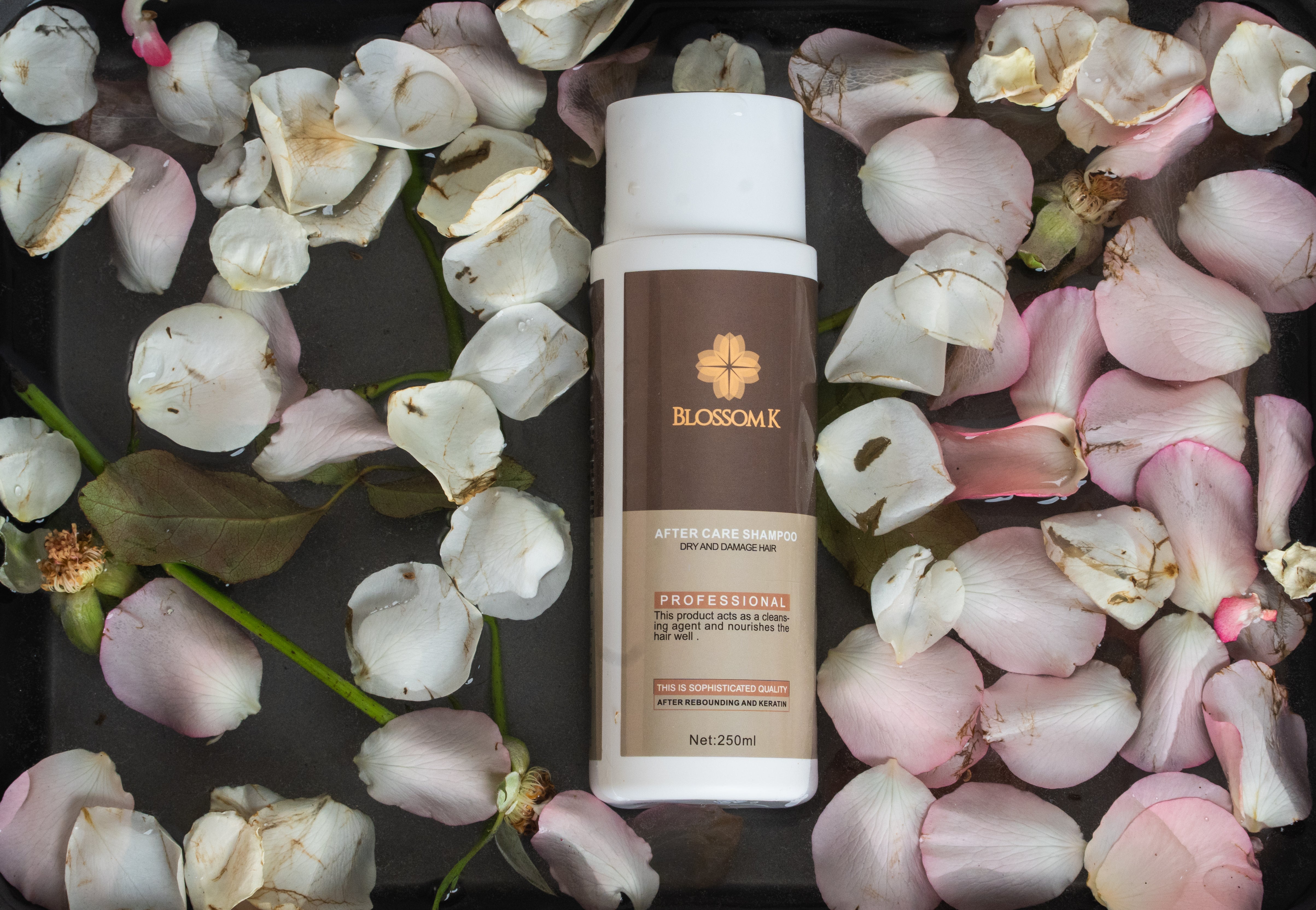
The Blossom K Hair Serum for Dry and Damaged Hair is formulated specifically for the type of dry, frizzy, brittle hair that hard water mineral damage produces. Its anti-frizz formula smooths the roughened cuticle surface that mineral buildup creates, while its shine-enhancing ingredients restore the light-reflecting smoothness of a properly sealed cuticle. Applied to the mid-lengths and ends after every wash, it provides the protective sealing layer that hard water hair needs between chelating treatments to prevent the rapid re-accumulation of mineral deposits on an unprotected surface.
Step Five: Reduce Washing Frequency Where Possible. Every wash with hard water is a mineral exposure event. Reducing wash frequency from daily to every two days gives the hair fewer exposure events per week without compromising scalp hygiene, especially when the chelating and serum routine is being applied consistently.
How to Protect Fine Hair Ends from Snapping in Hard Water Conditions
Fine hair ends are the oldest part of the hair shaft and have experienced the greatest cumulative exposure to hard water minerals, heat, mechanical stress, and environmental damage. They are the first to show the effects of mineral buildup as dryness, increased split ends, and ultimately snapping during brushing or styling.
Protecting fine ends in hard water conditions requires three specific practices applied consistently. First, apply the hair serum specifically and generously to the ends at every post-wash application, not just the mid-lengths. The ends have no sebum protection from the scalp and rely entirely on applied products for moisture and cuticle protection. Second, handle wet hair ends with minimal mechanical stress. Wet hair in a dehydrated, mineral-coated state has reduced elasticity and snaps more easily under tension. Detangle with a wide-tooth comb starting from the ends upward rather than pulling from the roots down. Third, trim the ends every six to eight weeks to remove the most severely mineral-damaged portions of the hair before the damage travels further up the shaft.
In Depalpur and Dunyapur, where agricultural water sources often carry elevated mineral content from surrounding soil composition, these end-protection practices are particularly important for people with fine or already-chemically-processed hair that has lower structural resilience to begin with.
Ingredients to Look for in Hard Water Hair Care Products
Not all shampoos, conditioners, and serums are equally effective in hard water conditions. Certain ingredient categories provide specific benefits for hair exposed to high mineral content water and are worth prioritizing when building a hard water hair care routine in Pakistan.
In shampoos, look for chelating agents listed as disodium EDTA, tetrasodium EDTA, or citric acid in the ingredient list. These directly address mineral removal at the cleansing step. Look for sulfate-free surfactant systems that clean without stripping the already-compromised cuticle further. In conditioners, look for cationic conditioning agents like cetrimonium chloride or behentrimonium methosulfate that bond to the negatively charged hair surface and smooth the cuticle scales that mineral deposits have lifted. In serums, look for silicone-free or low-silicone formulations that provide genuine cuticle protection without the buildup accumulation that heavy silicones contribute to over time, compounding the mineral buildup problem rather than addressing it.
According to the American Academy of Dermatology, hard water has been shown in clinical studies to decrease hair tensile strength and increase surface friction compared to soft water-washed hair, confirming that mineral buildup is a genuine structural hair damage mechanism rather than a perceived sensitivity. Explore the complete BlossomK hair care collection for a full range of products formulated to support hair health in Pakistan's challenging water conditions.
Frequently Asked Questions
Does hard water cause permanent hair damage in Pakistan?
Hard water causes progressive structural damage to the hair cuticle and cortex through mineral accumulation, but this damage is largely reversible in the early to moderate stages with consistent chelating treatments and a protective routine. Severely brittle or broken hair requires trimming the damaged portions while the new growth is protected from further mineral exposure.
How often should I use a chelating rinse for hard water hair?
Once a week is appropriate for most hair types in high hard water areas of Pakistan. Very fine or chemically processed hair may benefit from a gentler chelating treatment used twice weekly, while thick or resilient hair in moderate hard water areas may only need chelating treatment every two weeks.
Can apple cider vinegar replace a professional chelating treatment?
Apple cider vinegar provides mild chelating and cuticle-closing benefits through its citric and acetic acid content. It is effective for maintenance between professional chelating treatments but is not strong enough to fully address heavy mineral buildup. For significant accumulation, a product containing EDTA or stronger chelating agents is necessary.
Why does my hair feel rough and look dull even after conditioning?
Roughness and dullness that persist after conditioning are classic signs of mineral buildup on the hair cuticle. Conditioner cannot remove mineral deposits because it works by coating the cuticle surface rather than binding to and removing the ions underneath. A chelating treatment is required to address the underlying mineral layer before conditioning can be effective.
Is a hair serum necessary if I already use a conditioner?
Conditioner and hair serum serve different functions. Conditioner is rinsed out and provides temporary cuticle smoothing during the wash. A leave-in hair serum remains on the hair shaft after washing and provides ongoing cuticle protection, friction reduction, and moisture retention throughout the day. In hard water conditions, both are needed as part of a complete protective routine.
Protecting Your Hair Starts with Understanding Your Water
Hard water is not a problem that conditioner alone can solve, and it is not a problem that improves without deliberate intervention. In Pakistani cities where high-mineral groundwater is the daily reality, building a routine that includes weekly chelating treatment, correct wash technique, and consistent post-wash serum application is what separates hair that progressively breaks from hair that maintains its strength despite the water it is washed in every week.